
A soy candle rewards a little bit of attention. Skip these and it will dig a tunnel and give up early with wax still in the jar.
1. Trim the wick before every burn
Trim to about a quarter inch. Every time, including the very first one.
A long wick makes a tall, unstable flame. A tall flame produces soot, burns through wax faster, and can leave a dark ring on the glass. A trimmed wick gives a cleaner flame.
2. Respect the first burn
Soy wax has a memory. Whatever the melt pool reaches on the first burn is the boundary the candle returns to for the rest of its life.
If that first pool stops short of the glass, the candle will tunnel from then on, and no amount of later burning fully fixes it. Let the first burn go until the melted wax reaches the edge of the jar all the way around.
3. Know when to stop
Stop burning when about half an inch of wax is left in the bottom. Below that the flame is close enough to the glass to heat it unevenly.
If it has already tunneled, it is not a lost cause. Let it burn a little longer than usual next time and the pool will often widen back out on its own.
Why soy behaves this way
Soy wax remembers its first melt pool, so it is more sensitive to a short first burn than you might expect. A little patience the first time pays off for the rest of the jar.
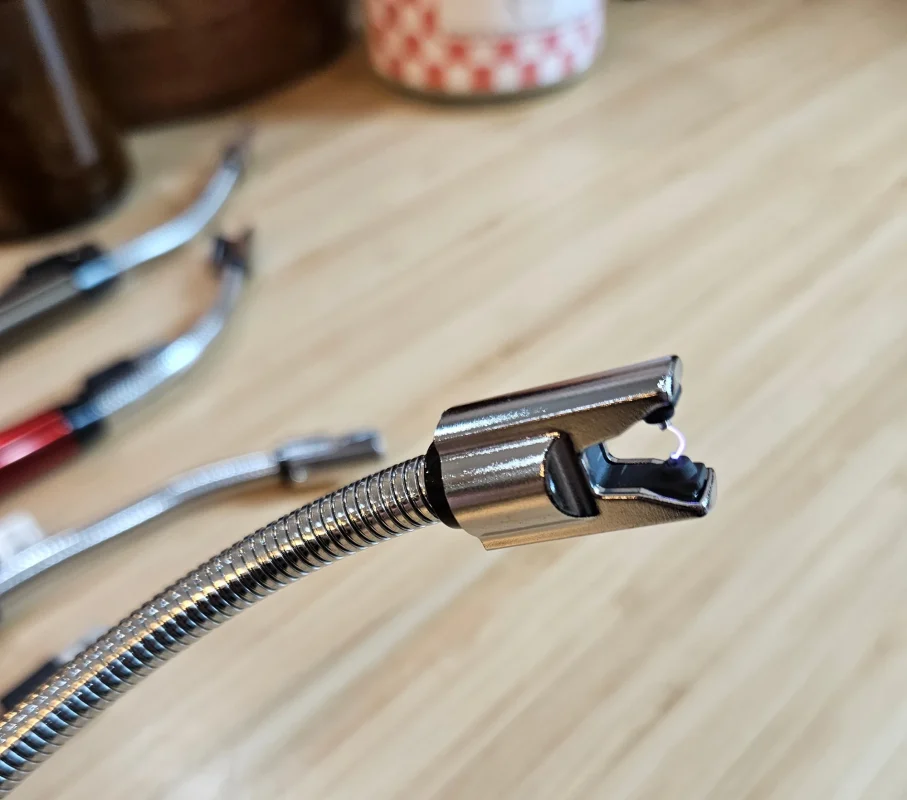
The tools that help
A trimmer and a proper lighter are the difference between a candle that burns all the way down and one that gives up early.
Shop candle care1/4 in
Wick height before every burn
Edge
Where the first pool must reach
1/2 in
Wax left when you retire it